Process diagram
BPMN 2.0 — Target process (To-Be). Based on real work experience. Details anonymized.
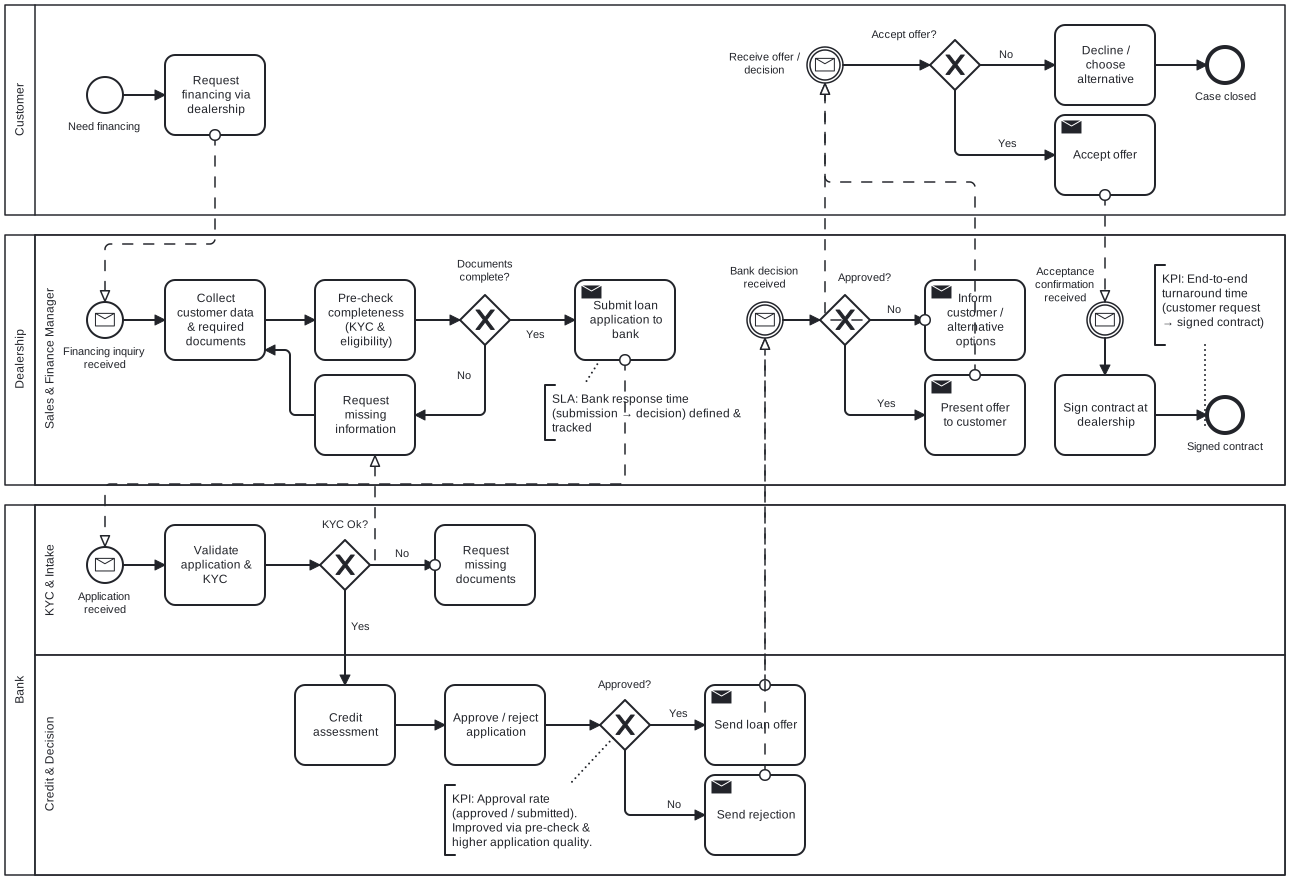
From ad-hoc intake to a controlled flow with KYC gating, timestamped checkpoints, and standardized bank decision reasons.
Domain
Automotive dealership (trucks / after-sales)
Role
Manager (Sales & Financing Operations)
Impact
Designed and implemented a controlled intake flow with quality gates, timestamped SLA checkpoints, and decision reason capture for analytics.
BPMN 2.0 — Target process (To-Be). Based on real work experience. Details anonymized.
Standardized the financing intake from customer inquiry to bank decision using KYC completeness gates, SLA checkpoints, and KPI reporting—reducing rework and improving decision predictability.
From ad-hoc intake to a controlled flow with KYC gating, timestamped checkpoints, and standardized bank decision reasons.
Keeps the process stable through ownership, measurement discipline, review cadence, and controlled updates.
Clarifies who does the work, who is accountable, and who needs to be consulted or informed - so handovers stay frictionless.
| Step | Customer | Dealership | Bank |
|---|---|---|---|
| Provide required documents | R | A/C | I |
| Pre-check (KYC gate) | I | A/R | I |
| Clarifications / missing info | R | A/R | C |
| Submit application | I | A/R | I |
| Decision + reason code recorded | I | R | A/R |
| Offer / next steps communicated | I | A/R | I |
R = Responsible, A = Accountable, C = Consulted, I = Informed
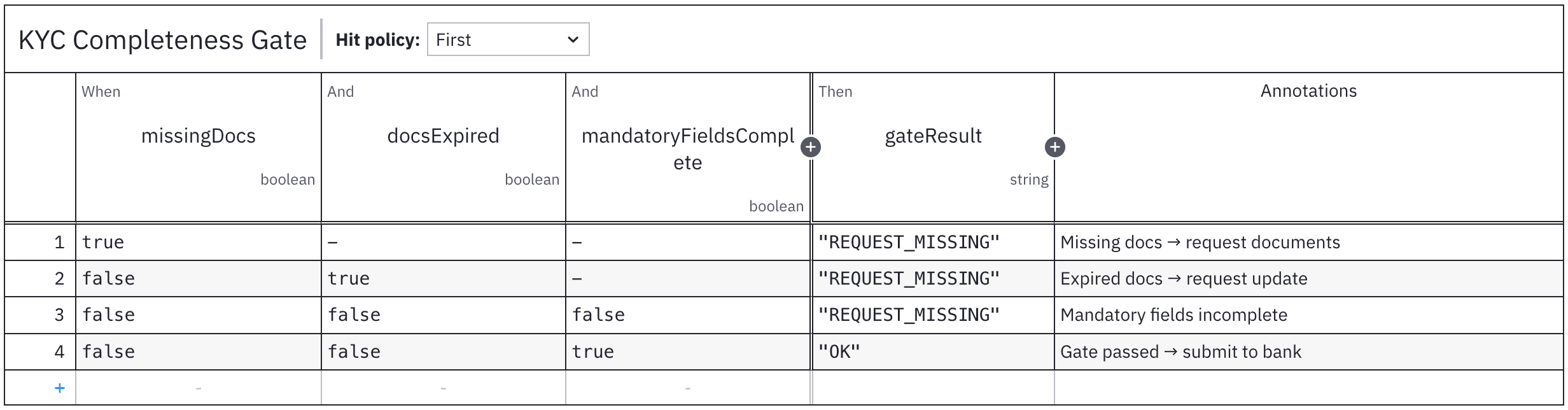
Decision table used to standardize the KYC completeness gate and make document checks consistent, auditable, and automation-ready.
Condensed SOP (excerpt) that standardizes execution across handovers and keeps every case traceable via mandatory timestamps.
—Ensure financing cases move consistently from inquiry to recorded bank decision, with controlled document quality and predictable follow-ups.
—Process owner: owns the SOP, metrics, and change control
—Case owner (Finance Ops): runs the case end-to-end and records timestamps/decisions
—Sales/Advisor: customer communication and offer/closure
—Bank contact: clarifications and decision
—Capture inquiry → create case
—Request documents → send standard list + deadline
—Validate KYC completeness gate → loop if missing/expired
—Submit to bank → track status
—Handle clarifications → resolve and resubmit if needed
—Record decision + reason code → communicate outcome
—Close case → archive and finalize
—request sent / docs received / submitted / decision recorded
—“Request missing documents”
—“Decision outcome & alternatives”
—reminders after X days; escalate if overdue
—close case after Y days of no response (policy)
—switch to alternative bank/terms when rejection criteria are met